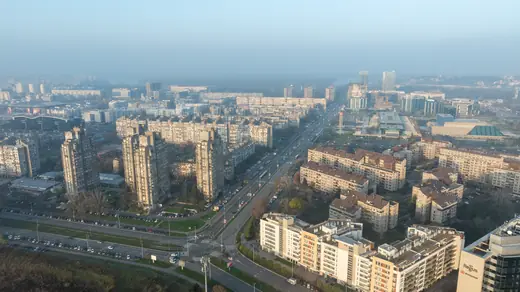
When dredgers began pouring sand over the marshland between the Sava and the Danube in 1948, few imagined today’s Novi Beograd.
The vision was bold: a planned, functional, spacious and green “city within a city” to relieve old Belgrade and house thousands of newcomers from across Yugoslavia. Block by block it grew, but for decades Novi Beograd was a place to live, not to work.
The beginnings
In 1947 the first sketches and architectural competitions began; Nikola Dobrović, the leading Yugoslav modernist, laid the foundations. Novi Beograd was meant to symbolise a new start and the administrative centre of the socialist state. The Genex tower, built at the end of the 1970s, combined offices, apartments and a panoramic restaurant at the top.
From ideal to transition
At the end of the 1980s small workshops, private firms and the first offices appeared in the ground floors of residential buildings; Enjub, the first modern shopping centre in Novi Beograd, opened. In the 1990s, while factories closed, offices opened in large apartments and empty warehouses, and businesses moved across the Sava to cheaper, roomier space.
A new millennium, a new identity
In Block 65, on the site of Belgrade’s first airport, Airport City, the first business park in Serbia, opened in 2006. Delta City, opened in 2007, became the first truly modern shopping centre in Belgrade; Ušće followed, on the site of the former Central Committee. Today Novi Beograd does not sleep: it works, builds and meets, from Ušće onwards.