Everyone sometimes wonders why their neighbourhood has its name. We looked into the names of Belgrade’s municipalities.
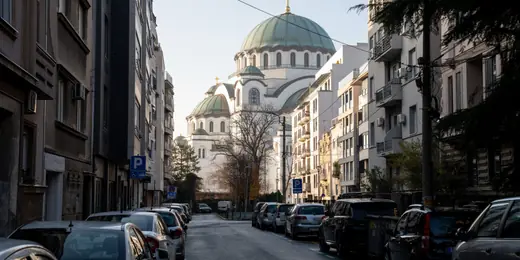
- Vračar: in the 16th and 17th centuries a Christian quarter outside the city, whose people the Muslims believed “practised magic” (vračaju); another theory links it to “vrač”, a healer, as in Russian.
- Savski venac: named after its position, like a wreath (venac) around the Sava.
- Banjica: after its many thermal-mineral springs and fountains, most of them destroyed when the area was built up.
- Voždovac: where vožd Karađorđe led his insurgents and first freed Belgrade from the Turks in 1806.
- Čukarica: after the tavern of Stojko “Čukar” Janković at the foot of Kamenjak hill, where the Topčiderska river meets the Sava, opposite Ada Ciganlija.
- Banovo brdo: after Matija Ban from Dubrovnik, who built a summer house with a vineyard there.
- Palilula: in Ottoman times it was outside the city, where smoking was allowed (pali lulu, “light the pipe”) while it was banned in the centre for fear of fire.
- Zvezdara: the area was once called Veliki Vračar; in 1887 an astronomical observatory opened on the hill, which became known as Zvezdara.
- Zemun: originally Taurunum; its Slavic name comes from “zemlin”, an earthen town, and the dugouts (zemunice) built there.
- Konjarnik: outside the settlement, all pastures and meadows where people brought their horses (konji) to graze.
- Rakovica: after the Rakovica stream which, legend says, was full of crayfish (rakovi).